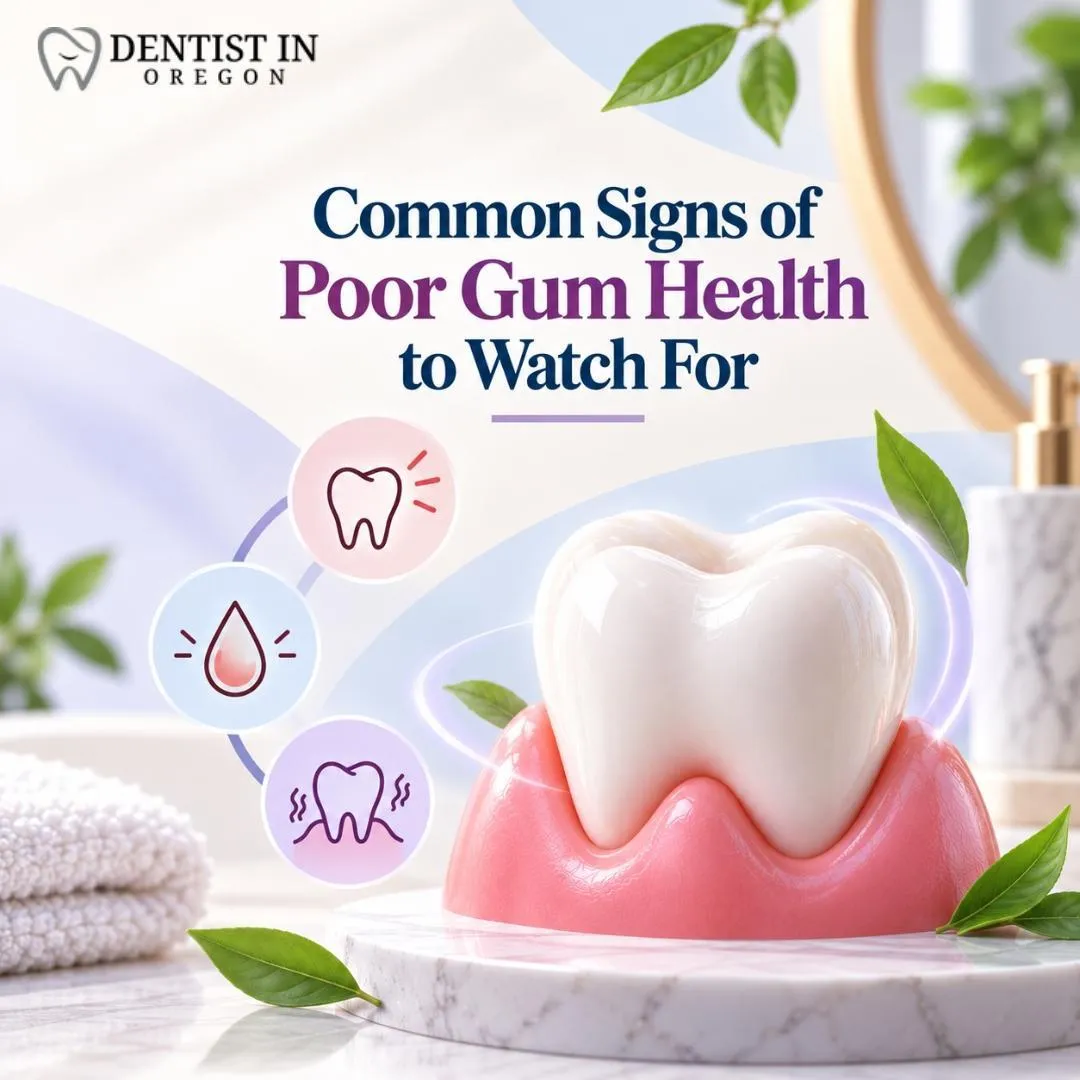
Many people worry about bleeding gums, bad breath, or teeth that feel loose. They want to know if their gums are healthy or if gum disease is starting.
Bad breath is a common sign of poor gum health and gum disease. This guide names signs like swollen or bleeding gums, receding gums, tooth sensitivity, and changes in gum color or texture.
It explains how plaque buildup, gingivitis, and periodontitis link to these signs. It also covers oral hygiene tips and when to seek dental care.
Key signs and symptoms of poor gum health can alert individuals to potential dental issues. Observing changes in gums may signal the need for a visit to the dentist.
Swollen, tender, or bleeding gums signal early gum disease. These symptoms indicate unhealthy conditions in the mouth. Bleeding and swollen gums often serve as primary indicators of advancing issues.
When people notice this inflammation, they should pay close attention. Tender gums that feel sensitive to touch can lead to discomfort and pain while eating.
Gum recession is another concerning sign of poor gum health. It can occur when the gum line pulls back from the teeth. This situation may result in tooth sensitivity or pain for many individuals.
Red or purplish discoloration also highlights problems within gum tissue. If someone experiences these signs, acting quickly could help prevent further complications down the road.
Seeking help from a dental professional becomes crucial at this stage for maintaining oral health and preventing tooth decay.
Swollen, tender, or bleeding gums can signal deeper issues. Gum recession often follows these early signs of trouble. This condition occurs when the gum line pulls back from the teeth.
It creates spaces that allow harmful bacteria to thrive. Tooth sensitivity often accompanies receding gums. Many people experience discomfort when consuming hot or cold foods and drinks.
Soft or weakened gums lack firmness and contribute to unsteady teeth. Loose teeth can develop if gum disease goes untreated for too long. Persistent bad breath might also be present as a symptom of unhealthy gums.
Whitish or discolored areas on the gums indicate further problems in gum health as well. A first-hand experience reveals how crucial it is to monitor these signs closely; early action leads to better outcomes for dental health overall.
Moving from gum recession and tooth sensitivity, persistent bad breath or an odd taste can signal poor gum health. Bad breath often indicates gum disease. This common sign arises as bacteria grow in areas of unhealthy gums. A person may notice a persistent unpleasant taste in their mouth, even after brushing their teeth regularly.
The color and texture of gums can change when conditions worsen. Discolored gums might appear whitish or purplish; this suggests unhealthy tissue is present. Tenderness may also arise, making the gums sensitive to touch.
Ignoring these symptoms can lead to more serious issues like loose teeth due to untreated infections spreading to the support bone around them. Regular dental check-ups become crucial for maintaining good oral hygiene and overall health.
Gum color and texture can reveal a lot about oral health. Healthy gums have a firm, pink appearance. Red or purplish discoloration of the gums signals an early warning sign of gum disease. These changes often accompany softness or weakness in the gum tissue, indicating unhealthy conditions.
Whitish or discolored gums may indicate serious issues that need attention. Additionally, tender gums are sensitive to touch and can be painful for individuals experiencing poor gum health.
Early signs such as these require prompt action to prevent further complications like tooth sensitivity or even loose teeth.
Taking action early is crucial for maintaining good gum health. Signs like swollen, bleeding gums and persistent bad breath indicate potential problems. Ignoring these symptoms can lead to serious issues, including loose teeth as the disease progresses to bone support around them. Soft or weakened gums signal the need for attention.
Seeing a dental professional can help address poor gum health before it worsens. A dentist can provide treatment options tailored to individual needs. Regular check-ups are essential in catching gum disease early on.
For those who notice changes such as red discoloration or tooth sensitivity, seeking help from a dental expert becomes even more important. Taking these steps ensures better oral health and overall well-being.
Look for bleeding gums when you brush or floss, swollen or red gums, and gums that pull away from your teeth. Also watch for bad breath that does not go away, pain, loose teeth, or receding gums.
Plaque and tartar build up on teeth and cause gum inflammation and early gum disease. Poor oral hygiene, smoking, and some medicines can make gums sore and swollen.
See a dentist if bleeding, swelling, pain, loose teeth, or pus lasts more than a few days. Get care sooner if your gums pull back or you have constant bad breath.
Brush twice a day and floss once a day to remove plaque. Get regular dental checkups and professional cleaning to remove tartar, stop smoking, and follow your dentist’s care to prevent gum disease.
Tell us a little about what you need — we'll be in touch shortly.
3555 Navarre Ave #12, Oregon, OH 43616, United States
Hi! I'm Tooth fairy! Your AI Assistant Ask me anything