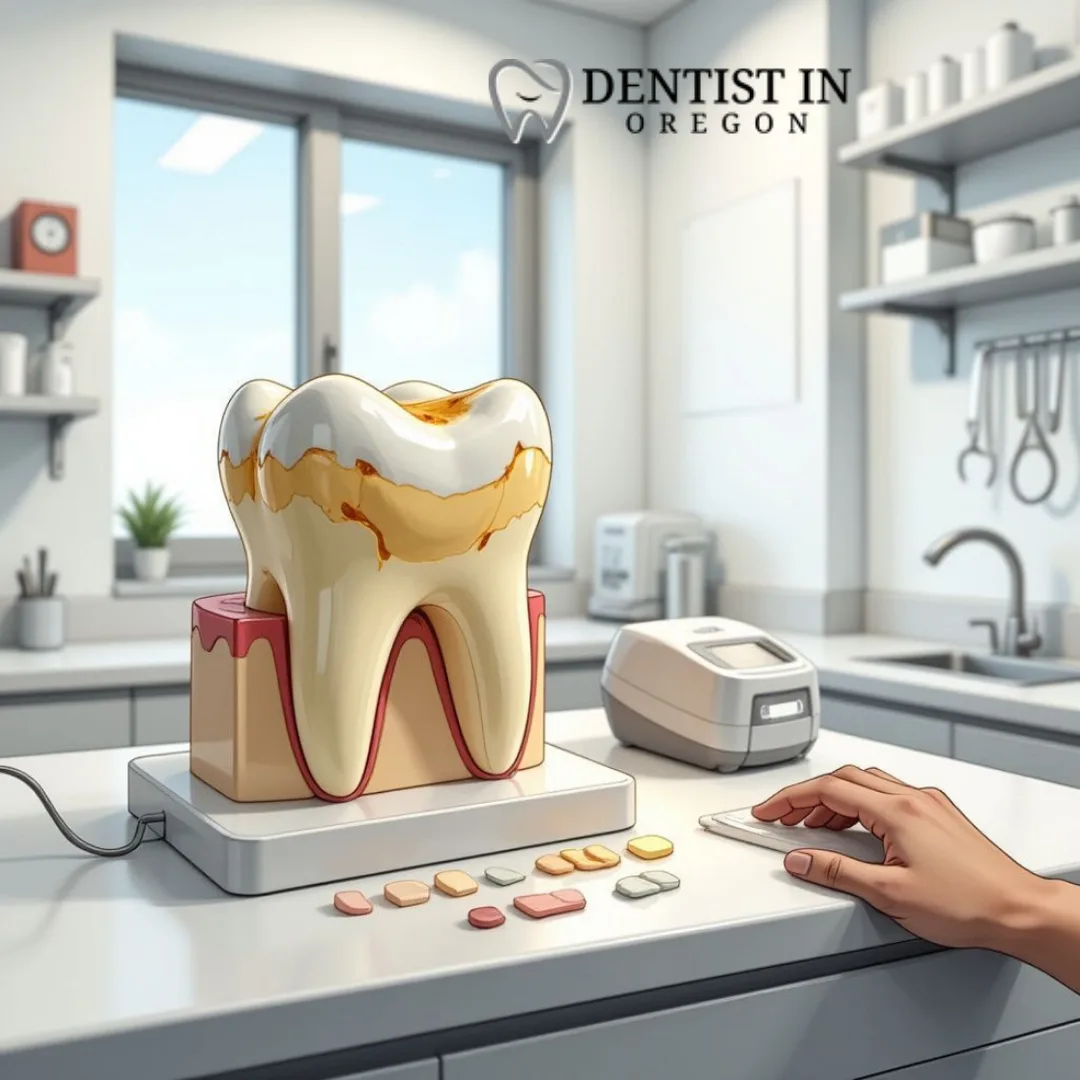
Many people feel self-conscious about a chipped, stained, or uneven tooth. They want a fast, affordable fix — and they worry about long dental visits and discomfort along the way.
Dental bonding uses tooth-colored composite resin to repair and reshape teeth. The resin is hardened with a curing light and shade-matched to your natural tooth color. Below you'll find the procedure step by step, what bonding can and can't do, and how to care for it afterward.
Dental bonding involves applying a tooth-colored composite resin directly to the tooth. Your dentist prepares the affected area and lightly roughens the enamel surface so the material adheres properly. An adhesive is applied, then the resin is shaped onto the tooth and cured with a special light that hardens it in seconds.
The resin is matched to the color of your surrounding teeth so the repair blends in rather than standing out.
The tooth is cleaned and the surface is gently etched to create grip for the bonding agent.
The composite is layered on and sculpted to rebuild the natural contour of the tooth.
A curing light hardens the resin, and the finished surface is trimmed and polished to a natural shine.
Because bonding rarely reaches the nerve, local anesthesia usually isn't needed and the visit is comfortable for most patients. The procedure can change the shape, size, or color of a tooth, and most cases are completed in a single appointment — which is what makes it one of the most efficient cosmetic dentistry options available.
Patients choose bonding for a few clear reasons:
There are trade-offs worth knowing. Composite resin does not last as long as porcelain, and it can chip or pick up stain over the years, so bonding may need occasional touch-ups. For larger repairs, heavy bite forces, or full smile makeovers, porcelain veneers or dental crowns often hold up better over the long term. The same composite material is also used for tooth-colored composite fillings when decay is involved rather than cosmetics alone.
Expected results: a shade-matched, seamless repair that looks like natural enamel, plus a healthier tooth surface where a chip or crack used to collect plaque.
Bonded teeth need the same care as natural ones — with a little extra caution in the first few days.
With reasonable care, dental bonding commonly lasts several years before it needs polishing or a touch-up — a durable, cost-effective option for tooth restoration and everyday smile repair.
Dental bonding is a common cosmetic and restorative procedure that fixes chips, gaps, and stains. It uses adhesive dentistry to attach a tooth-colored composite material to the tooth. The dentist shapes the material and hardens it with a light, leaving a repair that blends with your natural teeth.
The dentist cleans the tooth and lightly roughens the surface, applies an adhesive, then places the bonding material. It is shaped to match the tooth and hardened with a curing light. The whole process is completed in one visit.
Your dentist will walk you through each step before starting. Treatment uses small hand instruments and a gentle touch, and most people don't need numbing. Plan on roughly 30 to 60 minutes per tooth.
Brush twice a day and floss once a day. Avoid biting hard objects and chewing ice. Keep regular checkups so your dentist can monitor the bonding. It can last for years, though touch-ups are normal.
Bonding works best for small to moderate cosmetic repairs on teeth that are otherwise healthy. If a tooth is heavily decayed, cracked deep below the gumline, or under heavy bite pressure, your dentist may recommend a crown or veneer instead.
One chipped or discolored tooth doesn't need a long appointment or a large budget. Ask our team in Oregon, OH whether dental bonding is the right fit — call 419-690-0320 or book an appointment online.
With reasonable care, dental bonding commonly lasts several years before it needs polishing or a touch-up. Composite resin does not last as long as porcelain and can chip or pick up stain over time, so occasional repairs are normal. Avoiding hard foods, limiting coffee, tea, red wine, and tobacco, and keeping up routine exams all extend how long the repair looks new.
Dental bonding is typically painless. Because the procedure rarely reaches the nerve, local anesthesia usually is not needed, and treatment is done with small hand instruments and a gentle touch. The tooth is cleaned, lightly etched, and layered with composite that a curing light hardens in seconds. Most patients describe the appointment as comfortable and straightforward.
Most dental bonding cases are completed in a single appointment. Shade matching, surface preparation, placement, curing, and polishing all happen in the same visit, so you leave with the finished repair. Plan on roughly 30 to 60 minutes per tooth. That single-visit turnaround is what makes bonding one of the most efficient cosmetic options available.
Bonding repairs chips, cracks, and small gaps between teeth, reshapes short, uneven, or worn-looking teeth, and covers stains that whitening cannot lift. It removes very little natural tooth structure and costs less than most alternatives. For larger repairs, heavy bite forces, or a full smile makeover, porcelain veneers or crowns generally hold up better over the long term.
Care for bonded teeth the same way you care for natural ones, with extra caution in the first 48 hours. Avoid hard foods, ice, and sticky candy while the surface settles. Brush twice daily and floss once daily, including around the bonded edges, limit staining drinks and tobacco, and do not bite nails, pens, or packaging with bonded front teeth.
Tell us a little about what you need — we'll be in touch shortly.
3555 Navarre Ave #12, Oregon, OH 43616, United States

Hi! I'm Tooth fairy! Your AI Assistant Ask me anything