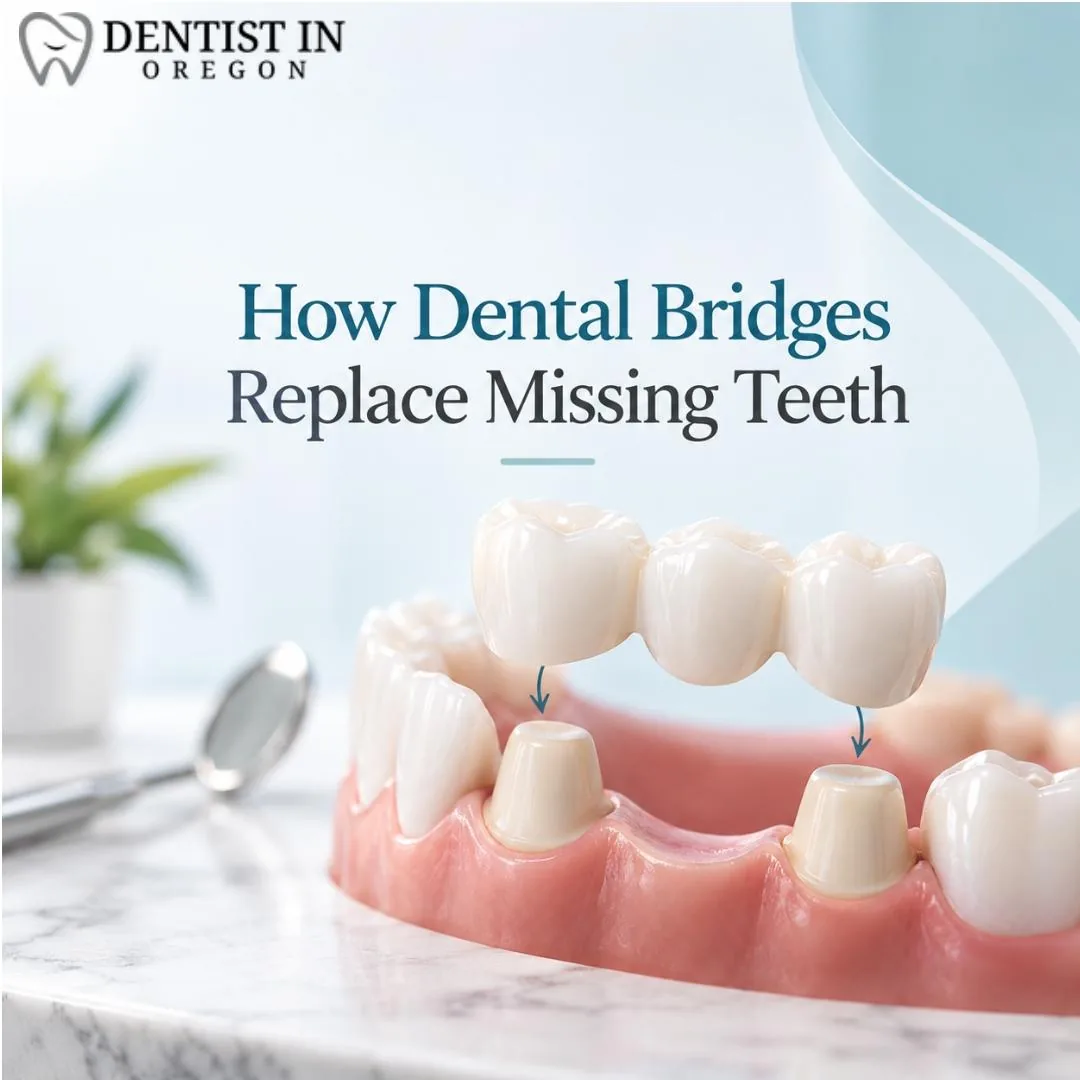
Missing teeth make chewing hard. They can change speech and ruin a smile. Many people want a stable tooth replacement that looks natural. Dental Bridges can fix that gap and restore function.
A dental bridge uses a pontic, and it anchors to crowns or dental implants. Dentists take impressions and may reshape enamel on abutment teeth during the procedure. This restores chewing, speech, and mouth shape while improving oral health and aesthetics.
Dental bridges fill the gaps left by missing teeth. They restore bite and speech while supporting the facial structure, making smiles look whole again.
Missing teeth create gaps that affect how people eat and speak. A dental bridge provides a solution by using an artificial tooth called a pontic to fill these spaces. This restoration attaches to nearby natural teeth or dental implants, creating a stable replacement.
Patients often notice improvements in their bite and speech after getting a dental bridge. It enhances oral health by supporting the structure of the mouth. With proper care, bridges can last for many years, making them a practical option for anyone facing tooth loss.
Dental bridges play a crucial role in restoring bite and speech. They fill gaps caused by missing teeth using an artificial tooth known as a pontic. By securely anchoring this pontic to nearby teeth or implants, dental bridges improve chewing function. Patients often notice that their ability to eat certain foods returns after the procedure.
Speech also benefits significantly from having a bridge in place. Missing teeth can make it difficult for some individuals to pronounce words correctly. With the addition of new crowns and proper alignment, many find that speaking becomes easier. First-hand experiences show improvement not just in functionality but also in confidence when smiling and talking with others.
A dental bridge supports facial structure by filling the gaps left by missing teeth. These bridges consist of one or more artificial teeth, known as pontics, that attach to nearby natural teeth or dental implants. Without these replacements, the face can sag and lose its shape over time.
Missing teeth can lead to changes in facial appearance. The absence of support from these natural structures may cause a person's features to look older than they are. By restoring function and aesthetics, dental bridges improve confidence and enhance overall smile quality; this boost positively impacts oral health too.
The dental bridge procedure involves several key steps. First, a dentist prepares the surrounding teeth by reshaping them for crowns that will support the bridge.
Dental bridges involve several treatment steps. First, the dentist examines the patient’s mouth and takes impressions to create a custom fit for the bridge. They reshape nearby teeth or plan for dental implants that will support the bridge.
Next, they attach crowns to these supporting teeth or implants, which serve as abutments. Finally, the dentist places a pontic in between these crowns to fill in the gap left by missing teeth.
There are different types of dental bridges available. A traditional bridge uses two crowns on either side of a pontic to anchor it securely. Cantilever bridges work when there is only one adjacent tooth present for support.
Maryland bridges use metal frameworks bonded to natural teeth instead of crowns. Each type serves as an effective solution for restoring functionality and improving appearance while enhancing overall oral health.
After understanding the treatment steps and types of bridges, the recovery process begins. Patients typically experience some discomfort right after the procedure. This sensation usually fades within a few days. Most people can return to regular activities almost immediately.
Dental bridges can last many years with proper care. They often stay strong for five to fifteen years or longer. Regular dental check-ups help maintain oral health and longevity of the bridge.
For those who want their dental bridge to last, practicing good hygiene is essential. This includes brushing twice a day and flossing daily around the crown and pontic areas. Many find that routine care enhances both comfort and durability in their dental restoration journey.
Following the recovery process, maintaining a dental bridge is crucial for its longevity. Regular brushing and flossing protect gums and teeth, ensuring gum health around the bridge.
Use non-abrasive toothpaste to avoid damaging the enamel of adjacent teeth. Dental prosthesis care includes visiting your dentist for routine cleanings and check-ups.
Patients should watch their diet too. Hard foods can pressure a dental bridge, so chew with caution. Using a soft-bristled toothbrush helps keep your bridge in good shape. Impressions taken during initial procedures guide proper care; always follow your dentist's advice on caring for crowns and pontics as well as any necessary maintenance steps related to dental implants or other restorations.
A dental bridge is a dental prosthesis that fills a gap from missing teeth. It holds a pontic, or replacement tooth, between crowns on nearby teeth. The crowns attach to abutment teeth. The bridge restores tooth replacement and gap restoration. It returns form and function.
A bridge has a pontic, or replacement tooth. It has crowns, or caps, that sit on abutment teeth. The abutment supports the bridge. Together they serve dental restoration and tooth replacement.
The dentist takes impressions to make the bridge. They may reshape enamel on the abutment teeth. They place temporary crowns if needed. Then they fit the final crowns and the pontic. This yields gap restoration and improved functionality.
A bridge restores chewing and speaking. It keeps other teeth from shifting into the gap. It protects gum health. It helps long term oral health and overall dental care.
Bridges use nearby teeth as abutments. Dental implants replace a tooth root with a post. Dentures are removable false teeth. A bridge may be faster than implants. A dentist or prosthodontics specialist can advise the best tooth replacement.
Brush twice a day and floss around crowns and the pontic. Visit the dentist for checkups and cleanings. Good dental care keeps gum healthy and protects enamel. Follow the dentist’s advice for long lasting dental restoration.
Tell us a little about what you need — we'll be in touch shortly.
3555 Navarre Ave #12, Oregon, OH 43616, United States
Hi! I'm Tooth fairy! Your AI Assistant Ask me anything