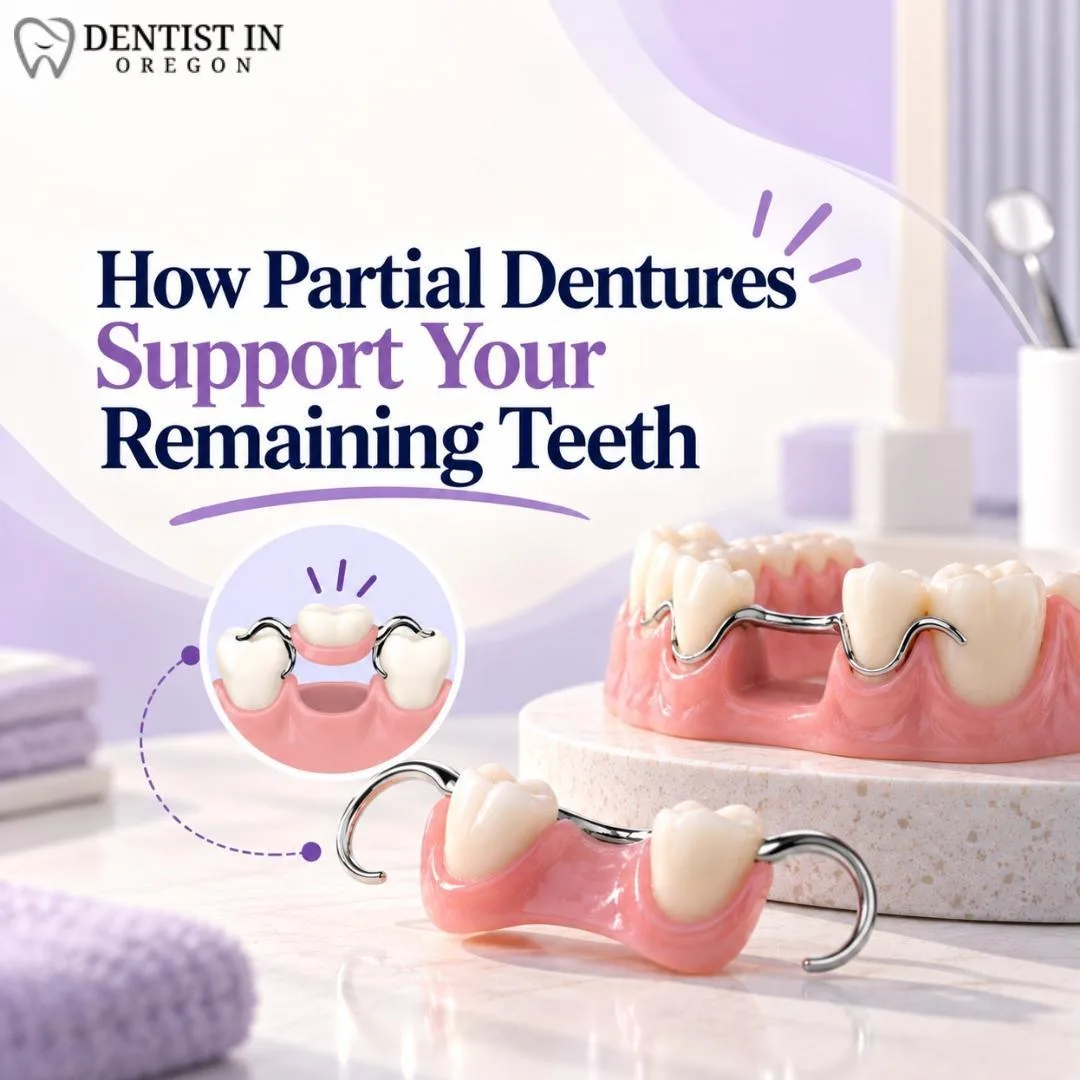
Missing teeth make daily life harder. Chewing feels off. Speech may change. A smile can lose its spark. Many people fear more teeth will shift or break.
Partial dentures hook around the remaining teeth with clasps for extra stability. They spread bite forces to lower wear on natural teeth.
Partial dentures have special clasps that hook around remaining natural teeth for extra stability and support. One patient reported feeling immediate balance, as the dental prosthesis distributes bite forces evenly and cuts down on excessive wear.
The appliance stabilizes remaining teeth and significantly reduces the risk of shifting over time. Clinicians attach the device with clasps or precision attachments to keep tooth retention strong and to preserve jaw bone density through bite pressure.
A wearer noted clearer speech and a natural-looking smile after the prosthetics replaced missing teeth. The denture also helps maintain gum support and bite alignment, which prevents future oral health issues and tooth loss.
A patient named Maria smiled wider after she got partial dentures. Small clasps hook around remaining natural teeth and lock the dental prosthesis to the dental arch. That connection spreads bite forces evenly, so no single tooth takes the brunt. This balance reduces extra wear and helps prevent further tooth loss.
A dentist fitted Maria with precision attachments for a snug fit and better bite stability. She felt her speech improvement and confidence restoration within days, since the denture kept teeth from shifting.
The bite pressure also stimulated her jaw, which helps preserve bone density and gum support. Friends noticed her restored smile, and she reported easier eating and clearer speech.
Partial dentures can help improve speech clarity significantly. They fill gaps left by missing teeth, allowing people to speak more clearly. This change boosts confidence during conversations and public speaking.
Users often report fewer issues with pronouncing words after getting partial dentures. The secure fit helps stabilize remaining teeth, reducing any extra movement that can cause mumbling.
Many patients notice that they no longer struggle with slurring or unclear pronunciation. As the dentures provide a stable bite, they support proper tongue placement for clearer sounds and better articulation.
Chewing with partial dentures becomes much easier. They help distribute bite forces evenly across the dental arch. This distribution prevents excessive wear on remaining teeth and reduces the risk of further tooth loss. A stable bite allows for better food breakdown, aiding digestion.
Good chewing helps absorb nutrients from food more effectively. With a proper fit, partial dentures maintain alignment while supporting existing natural teeth. This support plays a crucial role in preserving bone health as it stimulates the jaw through normal bite pressure. Enhanced chewing efficiency can lead to improved overall health and well-being over time.
Partial dentures play a vital role in supporting facial structure. They stabilize remaining teeth and maintain jaw alignment. This support helps prevent shifting, which can lead to changes in facial appearance over time.
Partial dentures also keep the dental arch intact. As a result, they help preserve bone health by stimulating the jaw through bite pressure.
The stability provided by partial dentures reduces the risk of further tooth loss. Keeping natural teeth in their proper positions contributes to overall gum health as well. A strong foundation prevents bone loss in the jaw, ensuring long-term oral wellness and an attractive smile that lasts for years to come.
Partial dentures play a crucial role in safeguarding oral health over time. They keep natural teeth in their places, which helps prevent them from shifting. This stability reduces future dental complications that might arise from misalignment.
Additionally, these dentures apply gentle pressure to the jawbone, maintaining its density and supporting overall structure.
Many people face bone loss when they lose teeth. Partial dentures help combat this by preserving remaining natural teeth and stimulating the jaw through bite forces. Protecting jaw health is vital for long-term wellness; it supports everything from chewing to speaking clearly.
The benefits continue as individuals experience improved speech clarity and confidence with their smiles, opening up new avenues for social interaction.
Partial dentures fit tightly and securely, providing comfort throughout the day. They use special clasps that hook around remaining natural teeth for added stability. This design enhances bite alignment while maintaining gum support.
Each denture is customizable to meet individual needs. Patients can choose different styles or materials to achieve optimal comfort and style. A well-fitted partial denture prevents shifting of existing teeth, which is crucial for long-term oral health.
Dental professionals often encourage regular check-ups to ensure a snug fit and proper adjustment, allowing wearers to enjoy their favorite foods without discomfort.
Partial dentures are easy to maintain, making them a popular choice. Daily care can help keep these dental appliances in top shape.
10. Adjusting to partial dentures can take some time and effort. Users may feel awkward at first, like wearing a new shoe that needs breaking in. Eating with dentures requires practice, so start with soft foods and chew slowly.
Clear speech will also improve over time as the user gets accustomed to their new dental friend.
Eating with partial dentures can feel new and a bit tricky. However, a few simple steps can make the process easier.
These tips help manage mealtime comfortably and successfully with partial dentures, enhancing overall dental experience as one adjusts to this change in daily life activities.
Clear speech often becomes a challenge after getting partial dentures. Adapting to these dental appliances takes practice, but effective strategies can ease this transition.
When people wear partial dentures, they want a snug fit. Adhesives help keep the prosthetics in place, while cushions add comfort. Regular dental visits play a big role in maintaining that secure fit.
Adhesives and cushions play a vital role in the comfort and security of partial dentures. They help keep the prosthetic firmly in place, preventing any slipping during daily activities like eating or speaking. These supportive elements provide a snug fit that offers confidence to wearers.
Cushions offer added padding, making the experience more pleasant. They reduce friction between the denture and gums, which can help prevent soreness. A secure attachment also prevents remaining teeth from shifting over time; this stability aids bite alignment and oral health.
With proper care and maintenance, individuals can enjoy their partial dentures while feeling at ease with their smiles again.
Partial dentures need regular check-ups to ensure they fit well and function correctly. Dentists can adjust the clasps or precision attachments that support the dentures, making them more comfortable.
Regular visits help keep teeth in their proper positions. This stability is crucial for maintaining bite alignment.
These appointments also allow dentists to monitor oral health, preventing potential complications down the road. They can notice any signs of shifting teeth early on before they become bigger issues.
Keeping up with dental check-ups helps preserve remaining natural teeth and supports overall gum health, which protects against bone loss in the jaw too.
Modern dentures offer new options for comfort and functionality. Advanced designs feature precision attachments that connect securely to surrounding teeth. These enhancements provide better stability and retention than traditional clasps alone.
This means no more worrying about slipping or discomfort while eating or speaking. Some advanced dentures even stimulate the jaw through bite pressure, safeguarding bone health over time.
They help maintain proper tooth alignment as well, reducing the risk of shifting teeth. As a result, individuals can enjoy improved confidence and oral health with these innovative dental prosthetics.
After discussing advanced denture options, it's clear that a restored smile changes lives. Partial dentures significantly boost emotional well-being. They provide more than just oral health; they restore confidence and invite social interactions.
People often feel self-conscious about missing teeth. A friend recalled struggling at gatherings, hiding their smile behind closed lips. After getting partial dentures, their world opened up again.
Speaking clearly became easier and laughter flowed freely without fear of judgment.
These dental prosthetics also enhance social experiences. With increased self-esteem, individuals engage more in conversations and activities with ease. Restored smiles contribute to healthier relationships by fostering authentic connections through openness and confidence.
Finding a trusted dentist is crucial for getting the best results with partial dentures. This partnership creates a solid foundation for dental health and comfort. A skilled dentist knows how to fit dentures securely, allowing them to attach properly to remaining teeth. They ensure that clasps or precision attachments give maximum support and stability.
A good dentist also helps maintain oral health by monitoring bone density and jaw structure. They can detect potential issues early, preventing complications down the line. Many patients share success stories about how their dentists improved their smiles and confidence through personalized care.
With expert guidance, partial dentures can boost bite alignment and enhance speech clarity significantly.
Partial dentures fill in gaps left by missing teeth. They prevent your other teeth from shifting out of place. This helps maintain your bite and overall dental health.
Absolutely! Partial dentures restore the ability to chew food properly. With them, you can enjoy a wider variety of foods without discomfort.
They might at first, but most people adjust quickly. You may notice some changes in how you pronounce certain words initially; practice makes perfect!
Every person is different, but many adapt within a few weeks. Regular use helps speed up this process, so don’t shy away from wearing them as much as possible!
Tell us a little about what you need — we'll be in touch shortly.
3555 Navarre Ave #12, Oregon, OH 43616, United States
Hi! I'm Tooth fairy! Your AI Assistant Ask me anything