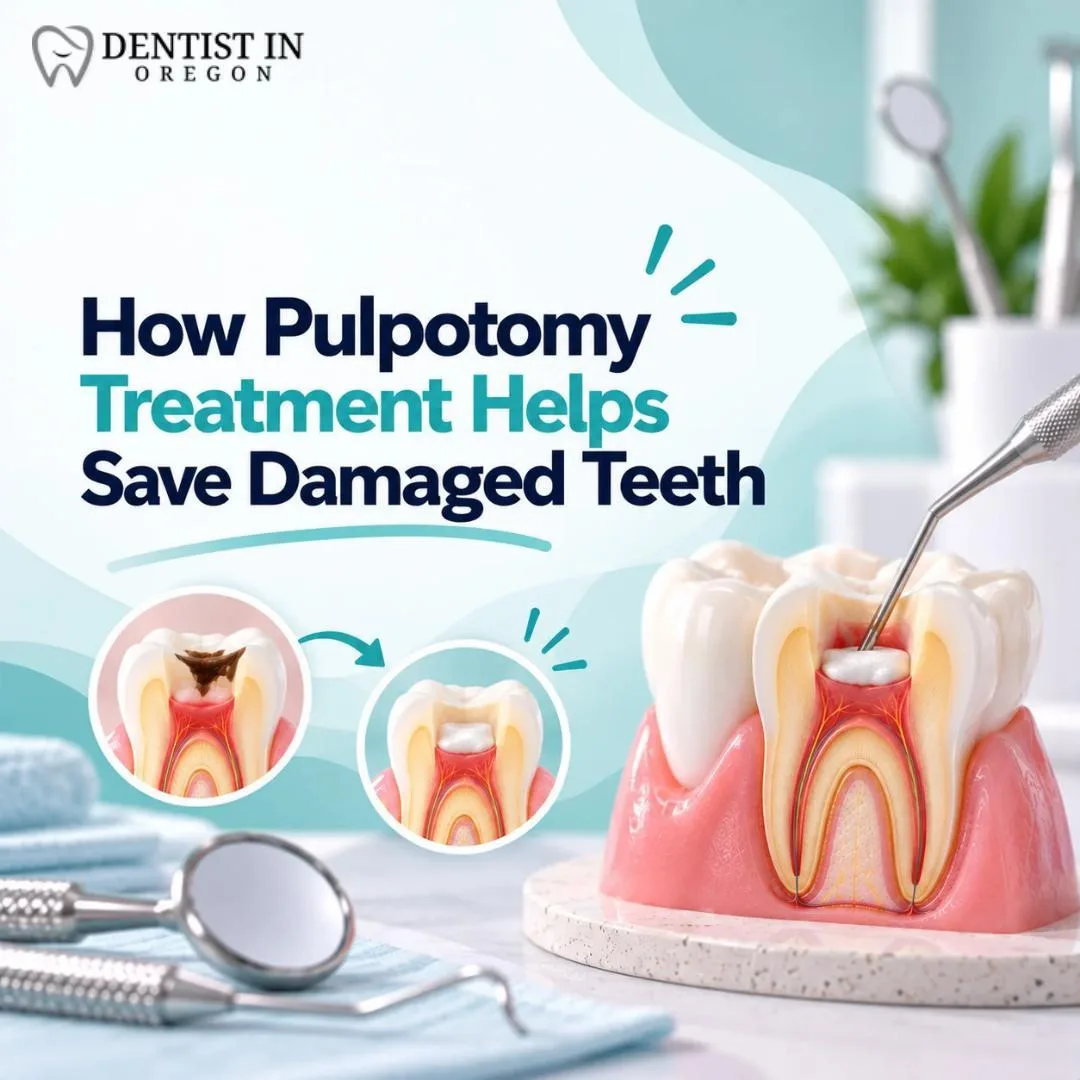
Many parents spot a small tooth problem and worry it will end in an extraction. A child may cry at night or avoid cold drinks. Pulpotomy can stop pain and save primary teeth. It treats infected dental pulp in the crown while keeping the root intact.
Here you will know about when dentists choose pulpotomy, the steps and the materials used to seal and protect the tooth.
A pulpotomy removes the infected top portion of dental pulp inside a baby tooth. Dentists use it to stop tooth decay and infection while keeping the primary teeth in place for proper chewing and speech.
A pediatric dentist recalls treating a five-year-old with a painful molar, removing decay, placing a medicated dressing, and sealing the tooth in one visit, which helped avoid extraction and delayed the need for a root canal on the adult tooth.
Dentists often suggest pulpotomy when a child’s tooth root is damaged, but the base is still healthy. Quick action here can save the tooth and help keep smiles bright for years to come.
Tooth damage can happen for many reasons. A pulpotomy helps save teeth by treating issues early.
A pulpotomy often saves a badly damaged tooth and keeps a smile intact.
| Benefit | Explanation |
|---|---|
| Preserves natural tooth | It keeps the original bite. This keeps chewing normal. The jaw stays aligned. The face looks the same. |
| Avoids implants or bridges | It prevents the need for replacement hardware. Those options cost more. They need more visits. Recovery can take weeks. |
| Less invasive than extraction | The process removes only damaged pulp. Healthy tissue remains. Pain and swelling are often lower. Healing is faster. |
| Maintains tooth strength | It keeps dentin and enamel intact. That keeps the tooth from becoming brittle. A strong tooth handles pressure well. |
| Protects nearby teeth | It lowers the chance of neighboring teeth shifting. Bite problems are less likely. Future orthodontic work may be avoided. |
| Shorter treatment time | Appointments are often quick. Fewer sessions are needed than for some alternatives. That saves time and stress. |
| Cost effective | It often costs less than extraction plus replacement. Insurance may cover part of it. Families can save money. |
| Better long term health | It reduces infection spread. Bone loss risk goes down. Oral health outcomes improve over years. |
The pulpotomy procedure helps dentists rescue damaged teeth. First, the dentist removes the infected tissue from within the tooth. They then clean and disinfect the area to stop infection in its tracks.
After that, they fill and seal the tooth with special materials to protect it for years to come. This process can save a child’s primary teeth while keeping their smile bright and healthy!
Pulpotomy treatment plays a crucial role in keeping damaged teeth healthy. This process focuses on preserving the tooth by addressing issues like infection or decay.
These steps help save primary teeth and maintain overall dental health, especially in pediatric dentistry contexts where preserving baby teeth is essential for proper development.
After saving the tooth during a pulpotomy, dentists focus on sealing and protecting it. They use specific materials to tackle this crucial step. Commonly, they apply dental cement or calcium hydroxide as a base. These substances help create a barrier that keeps bacteria out.
Then, dentists often finish off with a crown or filling. Crowns can offer extra support for damaged teeth, especially in children whose primary teeth require preservation. This combination of materials ensures lasting protection and helps maintain good oral health long after treatment is complete.
A pulpotomy treatment removes the damaged part of the tooth's pulp. It helps save teeth that have deep decay or infection, allowing for healing and restoration.
Pulpotomy treats the affected area while preserving healthy tissue. This keeps the tooth alive and functional, preventing further complications down the road.
Not at all! While it’s common in children's dentistry, adults can also benefit from this procedure if their teeth are damaged but still viable.
During a pulpotomy, your dentist will numb the area first; then they’ll remove infected pulp tissue and seal the tooth to protect it. You might feel some pressure but not pain; most patients report feeling relieved afterward instead of anxious.
Tell us a little about what you need — we'll be in touch shortly.
3555 Navarre Ave #12, Oregon, OH 43616, United States

Hi! I'm Tooth fairy! Your AI Assistant Ask me anything