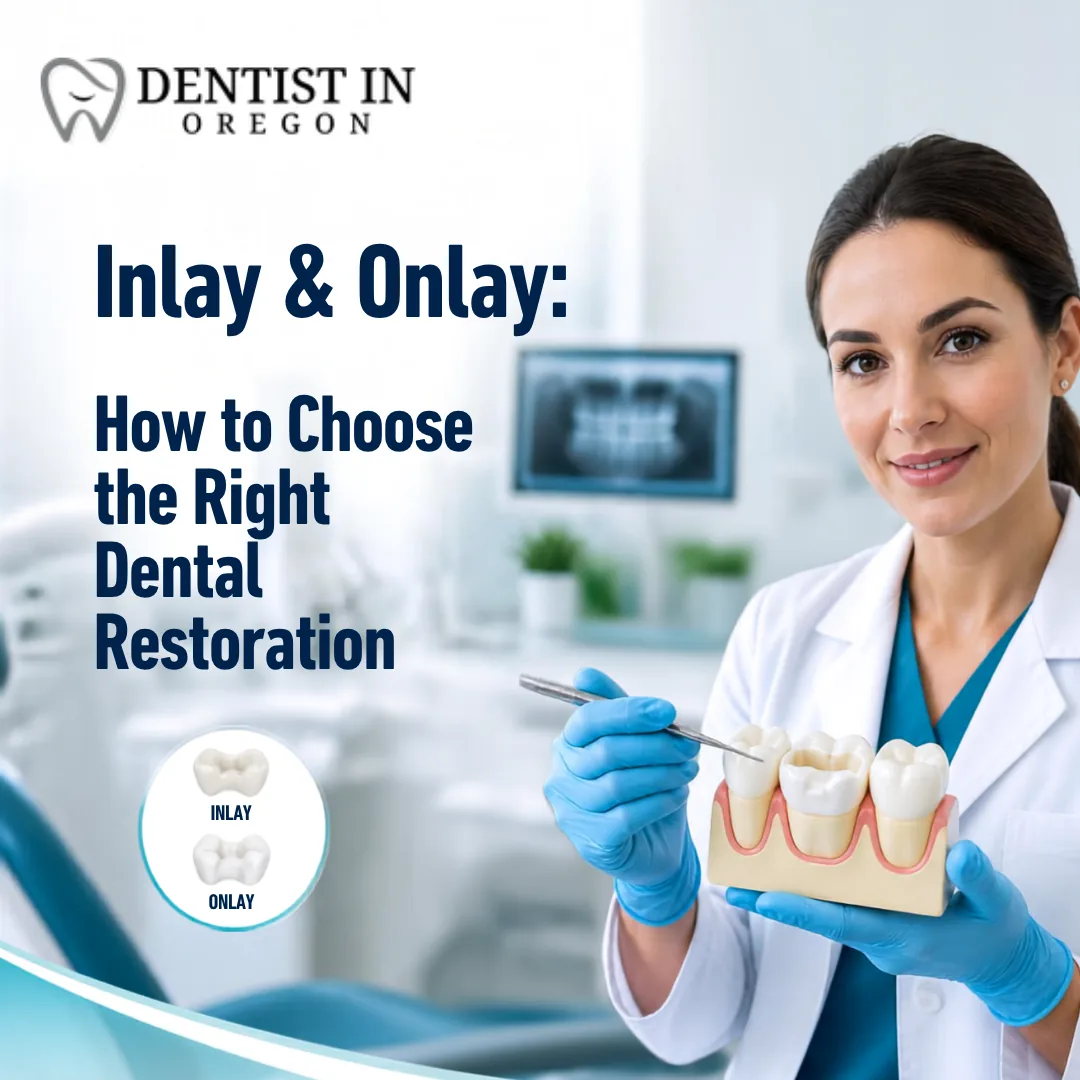
Many people feel stuck after a dentist says a filling may not last. They fear more drilling, a dental crown, or losing tooth structure. The term inlay onlay often comes up as a middle choice in dental restoration and tooth restoration care.
One fact is clear, inlays and onlays can save more teeth than a crown. They use composite resin or porcelain restoration for strength and a natural look. This guide will compare inlay, onlay, dental filling, crown options, and basic dental treatment steps.
Inlays and onlays serve as effective dental restorations, each with unique benefits. An inlay fits perfectly inside the tooth's grooves. It often uses composite resin or porcelain for a natural look.
In contrast, an onlay extends beyond the cusp of the tooth, offering more coverage. Dentists use them for larger cavities or damage to protect weakened teeth.
Both options restore function while maintaining aesthetics. Patients can enjoy improved chewing ability and reduced sensitivity after treatment. Choosing between these two relies on specific dental needs and conditions of the affected tooth, guiding individuals toward informed decisions about their dental restoration options.
Choosing the right dental restoration depends on the condition of your teeth. Inlays and onlays repair damage in a tooth while preserving more enamel than a dental crown. Both options use durable materials like composite resin or porcelain for strength and aesthetics.
Dentists often recommend inlays for smaller cavities that do not require extensive reshaping. Onlays work best for larger areas, covering more surface area to strengthen the tooth structure.
Factors such as cavity size, location, and patient preference influence this decision. Consulting with a dentist will provide clarity on which option suits individual needs better.
An inlay fits inside the grooves of a tooth. An onlay covers one or more tooth surfaces, including the top chewing surface. Both are types of tooth restoration. Both are forms of dental restoration.
A dentist will pick an inlay or onlay when decay or damage is too large for a dental filling but not severe enough for a dental crown. Inlays and onlays save more healthy teeth. A dental crown covers the whole tooth.
They check the size of the damage, how much tooth is left, and the bite. They also ask about cost and patient needs. Then they choose a dental filling, an inlay, an onlay, or a dental crown.
Inlays and onlays can last many years with good care. Brush twice a day and floss daily. Avoid very hard foods. Visit the dentist for regular checks.
Tell us a little about what you need — we'll be in touch shortly.
3555 Navarre Ave #12, Oregon, OH 43616, United States

Hi! I'm Tooth fairy! Your AI Assistant Ask me anything